
Introduction
-
Conscious connected breathing, or CCB for short, is a powerful guided technique that uses fast breathing to activate different states of consciousness and open new possibilities for self-understanding.
-
Conscious connected breathing allows us to access non-ordinary states of consciousness. That is to say, a different sense of awareness than we experience in our every day lives. This can lead to shifts in thoughts, values, understanding and insight that may help you to process things like challenging memories, past trauma, ‘stuck’ thought patterns, limiting beliefs and other mental ‘blocks’.
-
A connected breath is one that has no pause between the in breath (inhale) and the out breath (exhale). The key is to do an active inhale filling the lungs with air, and then passively allowing the breath to soften outward. This technique will be shown to you in more detail before the session begins.
Before your session
-
Because you’ll be breathing actively and deeply, it’s best to arrive with an empty stomach. Eat a small meal a few hours before your session or something light like fruit or a smoothie. Try to avoid alcohol and recreational drugs for at least a day beforehand, as they can affect your nervous system and interfere with your ability to drop into the practice.
-
Wear loose, comfortable clothing, and bring a yoga or camping mat to lie on. A few comfortable cushions to support your head and neck, along with a blanket, can help you stay relaxed and grounded. You might also want to bring an eye mask, a journal and pen for reflection afterward, and a bottle of water.
During your session
-
The full session usually takes around 90 minutes to 2 hours, including time for check-in, guided breathing, and integration.
-
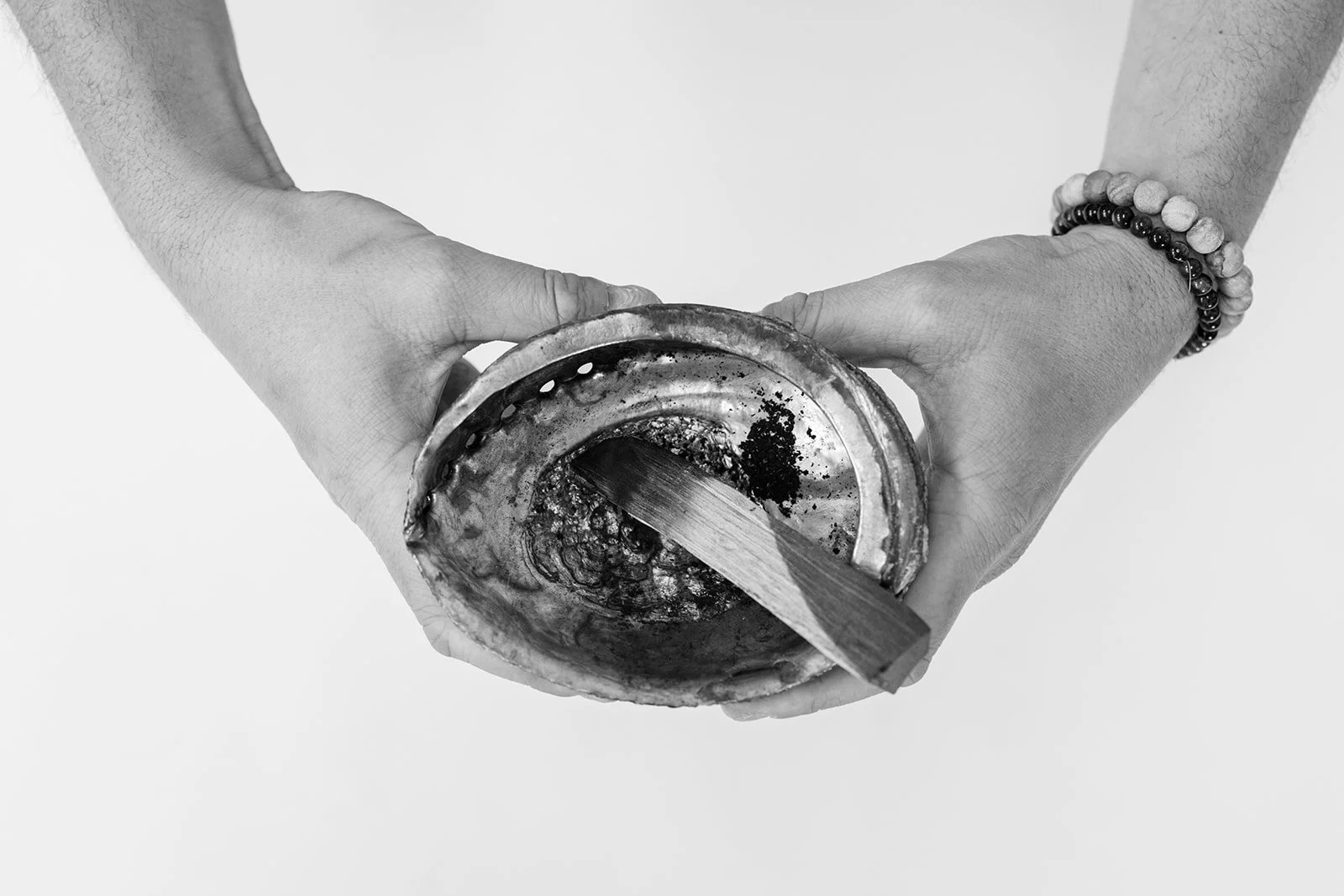
ach CCB session will begin with a check in, a short introduction to the technique, followed by a breath awareness practice which will flow into the conscious connected breathing session itself, which will be supported and guided with voice, music, and smoke (palo santo or similar).
-
Everyone’s experience is different. You might feel physical sensations like heat, cold, tingling, lightness or heaviness. You may feel emotions rise up or notice vivid thoughts, memories, or visuals. Some people feel a deep sense of calm or connectedness; others might feel resistance or discomfort at first. Whatever arises is welcome and will be supported.
-
As CCB allows us to reach different states of consciousness, awareness and insight, our normal social and psychological defense mechanisms that stop us from fully expressing emotion can be temporarily shifted. This can lead to a release of blocked emotions and physical energy. You might experience this as shaking, crying, laughter, groaning, writhing and wriggling. This is perfectly natural and breathwork is a safe space for you to express these emotions without fear of judgement.
-
You may experience cramping, tightening, tingling, or numbness in your hands or feet during the session. This is very common, and temporary. On a physical level, this is due to shifts in oxygen and carbon dioxide levels leading to temporary changes in the acid/alkaline and electrolyte balance in your blood. On a non-physical level, cramping may be interpreted as a sign of resistance, anxiety and the need to ‘let go’ of something. It’s important to note that no one has ever been permanently affected or “stuck” with claw hands from breathwork.
-
Yes. You are in charge of your experience. If at any point you feel overwhelmed, you can slow your breath, return to a natural rhythm, or stop completely. Your facilitator will be there to support you if anything comes up.
After your session
-
As we’ve discussed above, CCB can be emotional and cathartic, so we invite slow stretching and movement as you come back. Please take this time to let things land so you can get the most out of your experience.
-
Drink plenty of water, avoid stimulating environments or tasks (like social media or work) immediately after, rest, journal, or take a walk.
-
Reach out to your facilitator (my contact details will be provided) if anything lingers or feels overwhelming. Sometimes you remain sensitive and insights continue to unfold in the hours or days afterward, so keep a journal with you over the next few days.
Additional thoughts
-
Let go of any outcome. Trying to make something happen during a CCB often means you won’t have the experience you are looking for. Much like trying to force yourself to fall asleep, the more effort you apply, the harder it is. CCB works best with a sense of openness and a willingness to let the process guide you, rather than trying to control it.
-
At minimum, you will experience the physical benefits. Some people come out of their first session feeling like "nothing happened." That’s okay. Sometimes the mind and the body need time to feel safe before opening up to suppressed memories, thoughts, and emotions. Your system is working with what you’re ready for. Every session is different, and subtle experiences can be just as powerful over time.
-
IMPORTANT! Let your practitioner know about any medical conditions well in advance, especially if any of the following apply to you:
You are in the first trimester of pregnancy
You have high blood pressure that is not controlled with medication
You have a history of strokes or seizures
You have epilepsy
You have a detached retina or other serious eye conditions
You are experiencing active symptoms of severe PTSD (please consult with us beforehand)
You have any medical, psychiatric, or physical conditions that may limit your ability to engage in intense physical or emotional experiences.